Bedsores kill around 60,000 Americans every year. They cost the healthcare industry upwards of $26 billion annually. Yet, most people outside of critical care units have no idea how brutal or common these pressure injuries actually are. When you lie motionless in an ICU bed for hours, your skin looks fine on the surface. Underneath, tissue is already dying. By the time a nurse spots the wound visually, the damage is done.
Enter Maya Trutschl.
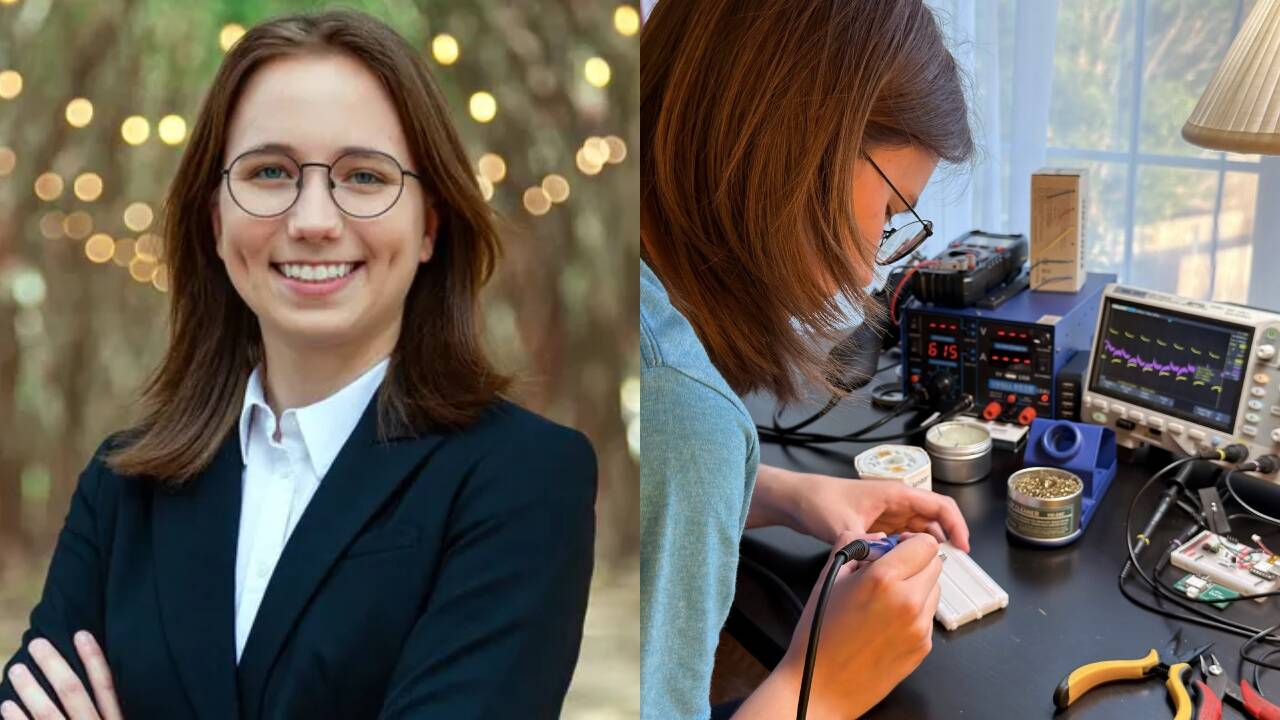
At 18 years old, this Shreveport student didn't wait for a medical device manufacturer to solve the crisis. She built her own diagnostic tool using a thermal camera and machine learning[cite: 1]. Total hardware cost? Under $130[cite: 1]. And her work just earned her a $25,000 Davidson Fellows Scholarship[cite: 1], alongside accolades at the Regeneron International Science and Engineering Fair.
Here is why her approach works, how she built it, and what engineers can learn from her medical breakthrough.
The Flaw in Traditional ICU Patient Monitoring
Hospitals rely on fixed-interval repositioning schedules to prevent pressure ulcers. Nurses turn patients every two hours. It sounds straightforward on paper. In practice, busy ICUs face severe staffing shortages, emergency interruptions, and administrative chaos. A delay of just thirty minutes can destroy compromised tissue.
Worse yet, traditional methods are entirely reactive. Nurses look for redness or skin breakdown after it happens. Subdermal tissue deterioration starts long before any color change appears on the epidermis.
Trutschl looked at this structural failure and realized hospitals needed an automated warning system. She didn't try to reinvent hospital beds. Instead, she combined thermal imaging with smart data processing to track patient movement and skin temperature shifts before ulcers form.
How the 130 Dollar Thermal Camera Setup Operates
The hardware component relies on an affordable thermal-sensing camera[cite: 1]. You don't need a multi-thousand-dollar proprietary medical scanner to monitor body heat and positioning.
The camera tracks how long a patient stays in a single static position[cite: 1]. When a threshold is crossed, it triggers an alert for the nursing staff[cite: 1]. It sounds simple, but engineering the software to ignore false positives in a chaotic hospital room is intensely difficult.
Trutschl tested her setup on real patients in a hospital ICU for over 150 hours[cite: 1]. Her system tracked patient positioning with an accuracy rate exceeding 99 percent[cite: 1]. That reliability is higher than many commercial systems costing tens of thousands of dollars.
Solving the Data Imbalance in Healthcare Machine Learning
Building the hardware was only half the battle. Trutschl also had to build a predictive machine learning model[cite: 1]. She used the MIMIC-IV dataset[cite: 1], which is a massive collection of real-world ICU patient records.
Machine learning models fail when fed heavily imbalanced data. Her dataset contained about 9,000 negative outcomes against only 3,900 pressure ulcer cases[cite: 1]. If you feed raw imbalanced data into a standard classification model, the algorithm simply guesses "no risk" every time and still boasts high mathematical accuracy while missing every single patient who develops an ulcer.
To fix this, she combined SMOTE oversampling with undersampling techniques[cite: 1]. She didn't just pick one algorithm; she tested ten different classification models to find the exact configuration that could reliably catch rare critical cases without generating alert fatigue for nurses[cite: 1].
Beyond the Lab
Trutschl isn't sitting around admiring her trophy cabinet. She is heading to the Massachusetts Institute of Technology to study computer science and aerospace engineering[cite: 1]. She has already published her research at an international conference in Copenhagen[cite: 1], founded a local Girls Who Code club[cite: 1], and launched The Unity Network to mentor high school students entering science competitions[cite: 1].
When she isn't building medical AI or baking cakes to unwind[cite: 1], she is competing as a swimmer[cite: 1].
Healthcare innovation doesn't always require venture capital funding or massive corporate R&D budgets. Sometimes it just takes an observant mind willing to look at a broken system and code a better path forward.