For decades, a strange economic loop has dictated the energy markets of East Africa. Nations pump crude out of the ground, ship it thousands of miles away to foreign refineries, and then buy it back at a massive markup as finished gasoline and diesel. Aliko Dangote wants to break that loop permanently.
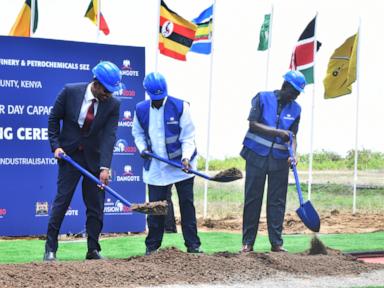
African heads of state gathered in Kenya's coastal Lamu County to break ground on a colossal $16 billion oil refinery project. Led by Nigeria's richest billionaire alongside Kenyan President William Ruto, Ugandan President Yoweri Museveni, and Ethiopian Prime Minister Abiy Ahmed, the project aims to flip the script on how the continent processes its own natural resources. Africa can't keep exporting raw materials and importing expensive finished goods. The math simply doesn't work anymore. You might also find this related story useful: Why Iran Threatening Regional Energy Infrastructure Changes The Oil Game Forever.
The Lamu Mega Refinery Project
The numbers behind the Lamu project are massive. Once construction wraps up in roughly forty months, the facility is designed to process 700,000 barrels of crude oil every single day. That capacity matches the scale of Dangote's massive Nigerian refinery, scaling a proven industrial blueprint across the continent.
The choice of Lamu wasn't random. Planners initially looked at Tanga in Tanzania, but engineering realities shifted the focus north. Lamu offers deep waters, solid ground capable of handling heavy industrial machinery, and direct deep-sea access. It's a strategic logistical hub built to handle supertankers and distribute fuel quickly across Kenya, Uganda, South Sudan, and beyond. As extensively documented in detailed coverage by Bloomberg, the effects are significant.
Critics always point out the immense financial risks tied to multi-billion-dollar infrastructure projects. Construction timelines slip. Budgets balloon. Land disputes pop up. In fact, local courts in Malindi have already ordered parties to maintain a status quo on parts of the designated land pending upcoming hearings. Big industrial projects never happen without friction. But the core economic driver remains undeniable. East Africa consumes far more than 700,000 barrels of petroleum products daily. The demand is already sitting right there on the ground.
Rewriting Regional Energy Trade
Right now, countries across East Africa burn through hard foreign currency just to secure basic fuel imports. Refined products arrive from international markets loaded with shipping costs, insurance fees, and import duties. That structural dependency bleeds national treasuries dry and leaves local economies vulnerable to global shipping bottlenecks and price spikes.
By building domestic refining capacity, the region keeps currency local and slashes transportation overhead. Dangote has even offered regional governments a combined 30% stake in the refinery project. That kind of equity share binds neighboring nations directly to the success of the plant, turning a national venture into a truly regional economic shield.
Uganda and South Sudan already sit on significant oil reserves, while neighboring fields continue exploratory development. Feeding those local crudes directly into the Lamu facility creates an integrated energy corridor. Instead of sending oil out to foreign ports, regional pipelines will pump crude right into domestic processing plants.
The Industrial Future of the Continent
Industrialization requires steady power, reliable fuel, and sovereign control over supply chains. When a continent relies entirely on outside nations for refined diesel and jet fuel, its entire industrial base sits at the mercy of global supply shocks.
You can watch the same pattern play out across multiple sectors. Raw minerals leave African ports only to return as high-priced technology components. Changing that dynamic takes immense capital, political willpower, and industrial grit.
The groundbreaking ceremony in Lamu marks a definitive statement of intent. Leaders from Uganda, Togo, Benin, and Ethiopia stood alongside Kenyan hosts because they know their national economies face the exact same fuel vulnerabilities. If this facility hits its targets by 2030, it won't just lower pump prices for everyday motorists. It will rewrite how East Africa trades, manufactures, and powers its own future.