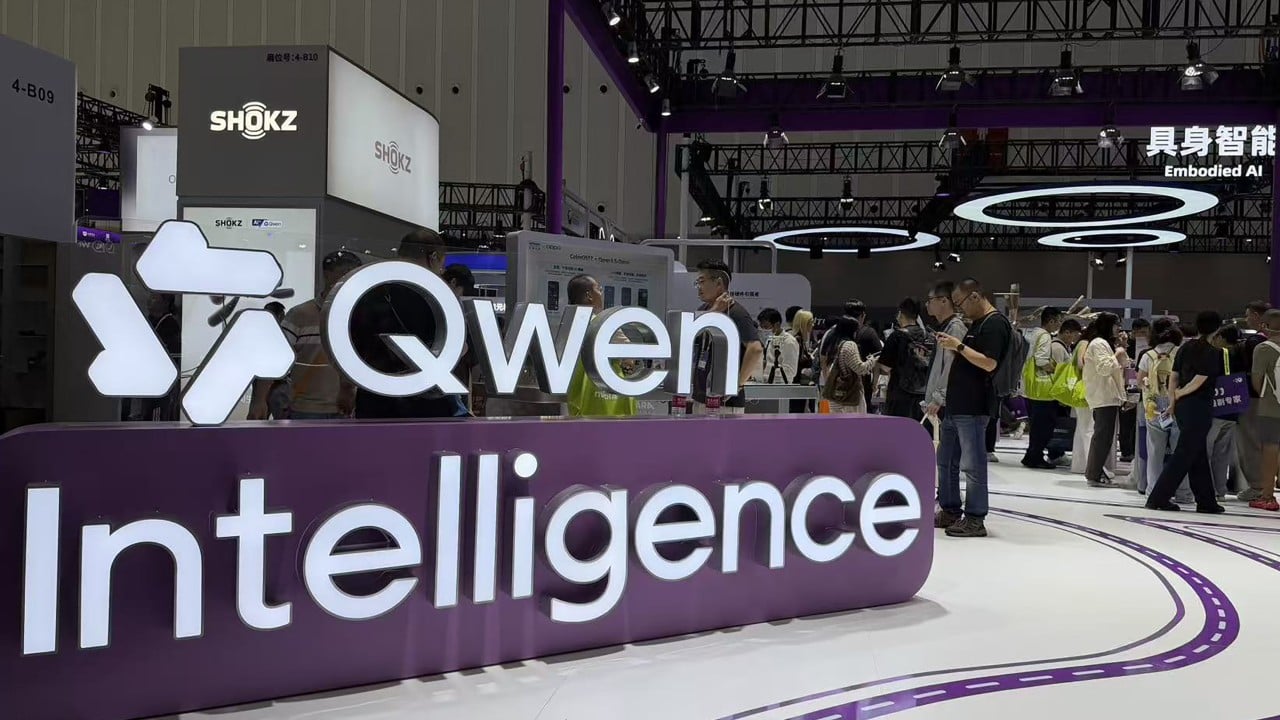
Everybody wants to talk about artificial intelligence until the electricity bill arrives. Right now, the tech industry is waking up to a harsh financial reality: writing flashy chat models is easy, but keeping them running profitably is brutal. That is precisely why Alibaba just ripped up the industry playbook and laid out a remarkably grounded strategy at its annual Apsara Conference.
Instead of chasing vague milestones, the Chinese tech titan is pivoting hard toward infrastructure efficiency and monetization. If you want to know where enterprise technology is actually heading, look past the marketing hype. Look at what Alibaba is doing with silicon, data centers, and multi-billion-dollar compute math.
The Reality Check on Machine Thinking
Let us talk numbers for a second. Alibaba CEO Eddie Wu dropped a stat recently that puts everything into perspective: the total volume of machine thinking currently sits at less than three percent of human thinking. There is an enormous runway ahead, but you cannot capture that market if your cloud costs eat your lunch.
Alibaba is attacking this problem from the metal up. They aren't just renting out servers anymore. They are building a massive infrastructure backbone, targeting a global data center capacity of over 20 gigawatts by 2032. That is a massive bet on long-term enterprise demand, backed by previous commitments to pump billions into cloud computing and specialized hardware.
When your cloud division reports triple-digit growth in AI-related products for twelve quarters straight, you stop treating AI as an experimental side project. You treat it as your core utility.
Building Chips and Training Monsters
You cannot talk about efficiency without talking about hardware. Most software companies are entirely dependent on third-party silicon, leaving them vulnerable to supply chain bottlenecks and high operating costs. Alibaba is taking the opposite route by leaning heavily on its T-Head semiconductor unit.
During the conference, the company showed off its hardware ambitions, including the Zhenwu V900 AI accelerator and upcoming Yitian CPUs scheduled for 2027. By designing their own processors, they are trimming dependency on commercial chips and engineering a way to expand profit margins as compute volume spikes.
At the same time, their foundation models keep scaling. The Qwen 4 model is currently in training, with future iterations targeting a staggering five to ten trillion parameters. More importantly, they are using recursive self-improvement to automate model training. In recent tests, their models spent dozens of hours refining chip designs, cutting chip area by forty-two percent without losing an ounce of performance. That is not just coding for fun. That is software building better hardware to save real money.
Shifting From Apps to Autonomous Agents
The real money in technology isn't in answering chat prompts. It is in getting things done. Alibaba is organizing its software layer around an agent-native cloud architecture, featuring tools like AgentCore and Agent Context.
Most enterprise AI projects fail because they burn through tokens and memory, making them too expensive for routine business operations. Alibaba's new context service connects corporate documents, databases, and chat histories into a unified layer. According to their data, this cuts token consumption by up to sixty-seven percent in knowledge-heavy tasks like customer service and data analytics.
Think about what that means for a corporate buyer. You aren't just buying a smarter chatbot. You are buying an automated workflow that actually fits inside your existing operational budget.
What This Means for the Rest of Us
If you are building software or running an enterprise tech stack, this pragmatic shift matters. The era of burning infinite venture capital on raw compute power is hitting a wall. The winners of the next decade will be companies that make intelligence cheap, accessible, and deeply integrated into physical infrastructure.
Stop waiting for a magical breakthrough that changes everything overnight. The real revolution is happening in the data centers, the silicon foundries, and the backend architecture optimization layers. Focus your strategy on efficiency, watch your token usage, and build for scale from day one.