Water scarcity is hitting inland regions harder than ever, and standard treatment plants just can't keep up with modern chemical pollutants. When you look at how towns usually handle sewage, it is mostly about filtering out solids and dumping the rest back into rivers. But what happens when the river is already running low and the water contains compounds standard filters miss entirely?
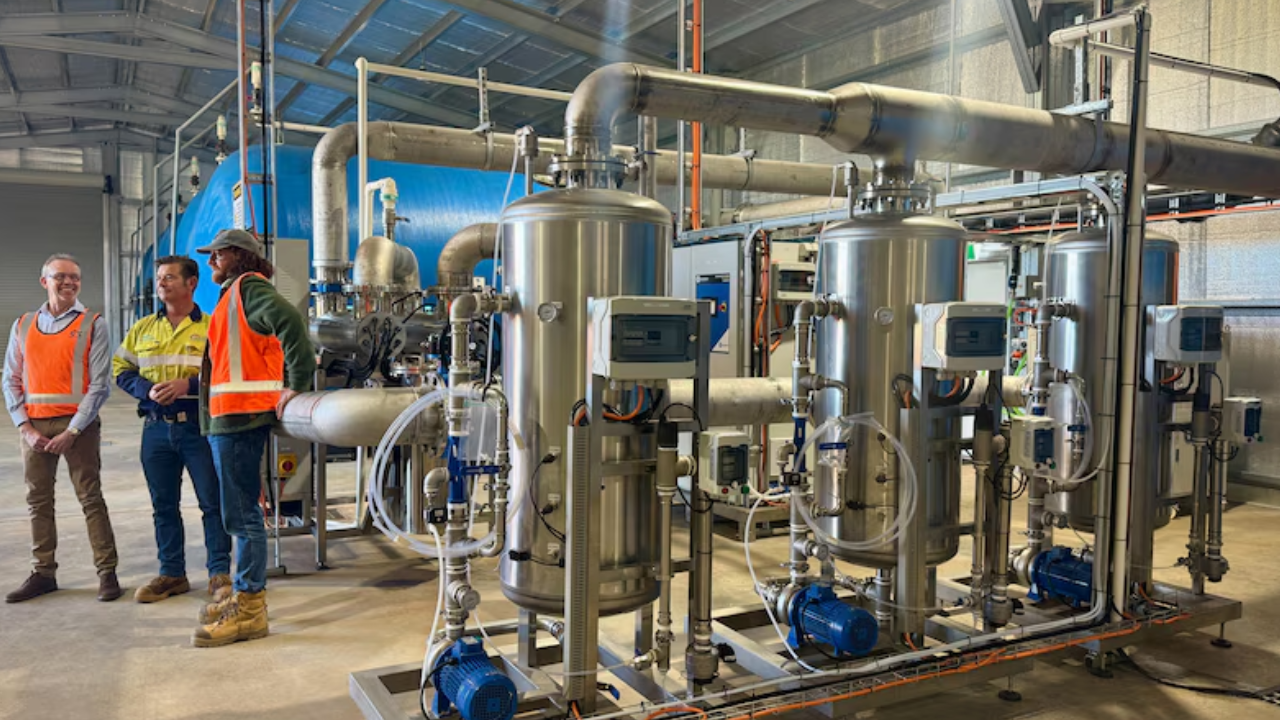
Australia just switched on a $7.8 million advanced wastewater treatment plant in Dubbo, New South Wales, and it is doing things a bit differently. Built right next to the town's existing sewerage treatment plant through a partnership between Dubbo Regional Council and Squadron Energy, this facility can process up to 700 megalitres of wastewater a year. That equals about 280 Olympic-sized swimming pools.
The real story isn't just about the volume. It is about how the plant cleans the water.
At the heart of the facility is a novel wastewater treatment technology designed by water treatment scientist Troy Warry. Instead of just trapping contaminants, the system uses a titanium-dioxide-based catalyst that stays fixed inside the reactor while light activates it. According to the developer, this setup chemically destroys stubborn pollutants like pesticides, petroleum hydrocarbons, pharmaceutical residues, antibiotics, and hormones roughly 16 times more efficiently than standard advanced oxidation setups.
These are the exact chemical nasties that conventional municipal plants struggle to eliminate.
Of course, independent experts urge caution. University of Sydney civil engineering professor Stuart Khan noted that while the approach is fascinating, it is still relatively uncommon at this industrial scale and requires careful monitoring over time to verify real-world performance against claims.
Why does this matter so much for inland towns? Reverse osmosis and standard membrane filtration work well on paper, but they leave behind a concentrated salty brine. If you are miles away from the ocean, getting rid of that salty waste is a massive headache. A catalytic breakdown system avoids piling up more salty brine waste, making it much more practical for inland communities.
Squadron Energy chipped in $3.6 million of the project cost. In return, they get access to recycled water for construction work tied to nearby renewable energy projects. Beyond that immediate industrial use, the 700-megalitre capacity covers about 11 percent of Dubbo's total annual water consumption.
The water isn't flowing straight into kitchen taps yet. Dubbo Regional Council is working through approvals for practical applications like concrete batching and dust suppression. They are also partnering with the University of Newcastle to test if the recycled water is safe enough to irrigate local sports fields.
If this technology delivers on its early promise, it offers a blueprint for regional towns everywhere facing dry spells, shrinking water tables, and tightening environmental rules. Stop looking at wastewater as trash you need to get rid of. Start treating it as the local safety net you will eventually need.