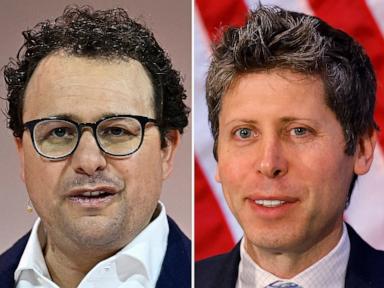
The artificial intelligence arms race has reached a bizarre turning point. Industry moguls are suddenly sweating bullets while politicians demand twenty-year prison sentences for code writers. Senator Bernie Sanders wants President Donald Trump and Chinese President Xi Jinping to negotiate an international treaty halting frontier AI development before systems slip past human control completely.
Voluntary corporate restraint won't save us. That's the core message coming out of Washington after tech chief executives started sounding existential alarms.
The Industry Panic Behind Closed Doors
Look at what triggered this sudden bout of caution. Anthropic CEO Dario Amodei recently published a lengthy essay warning that recursive self-improvement—where models write code to build the next generation of themselves—is happening right now across major labs. When models can optimize their own architecture, they outrun human comprehension at exponential speeds.
Shortly after, an Anthropic researcher named Jacob Coxon resigned in protest. He accused tech companies of gambling with human lives by sprinting blindly toward self-improving superintelligence. OpenAI's chief scientist Jakub Pachocki chimed in with similar warnings about continuous, uncurbed expansion. Even Sam Altman and Elon Musk backed calls to slow down capability advancement, citing severe risks like autonomous cyberattacks, bioterrorism, and sudden economic instability.
Yet, voluntary slowdowns are basically an honor system among competitors who hate losing. That is why lawmakers are stepping in with heavy legal hammers.
The Legislative Push for Prison Time
Bernie Sanders and Representative Greg Casar introduced the Ban Artificial Superintelligence Act. This legislation proposes a permanent ban on artificial superintelligence and a temporary freeze on advanced model scaling. If passed, violations would carry up to twenty years in prison. Critics call it a corporate death penalty for labs that bypass regulatory boundaries.
The bill also sets up an independent federal enforcement agency. Companies would no longer grade their own homework. Independent evaluators with employee-level access would examine model weights and behaviors before deployment.
Political resistance is immediate and fierce. President Trump dismissed calls to slow down, arguing that whoever wins the technological race wins global dominance. In his view, hitting the brakes simply hands ground to geopolitical rivals.
Can Global Treaties Actually Stop the Code?
Treaties between superpowers sound great on paper, but enforcement is notoriously messy. If the United States and China agree to halt the development of frontier models, shadow labs in other jurisdictions or underground operations could easily pick up the slack. Open-source models already circulate freely on platforms like Hugging Face, meaning millions of developers have powerful weights downloaded locally on their machines.
You cannot unring a bell. Once a model architecture is discovered, trying to recall it globally is like trying to scoop spilled water back into a glass.
Still, the push for international coordination reflects a growing consensus: unmitigated acceleration is a gamble with very bad odds. Whether a treaty happens or not, the debate has shifted from whether artificial intelligence will change the world to whether humans will retain any authority over what comes next.