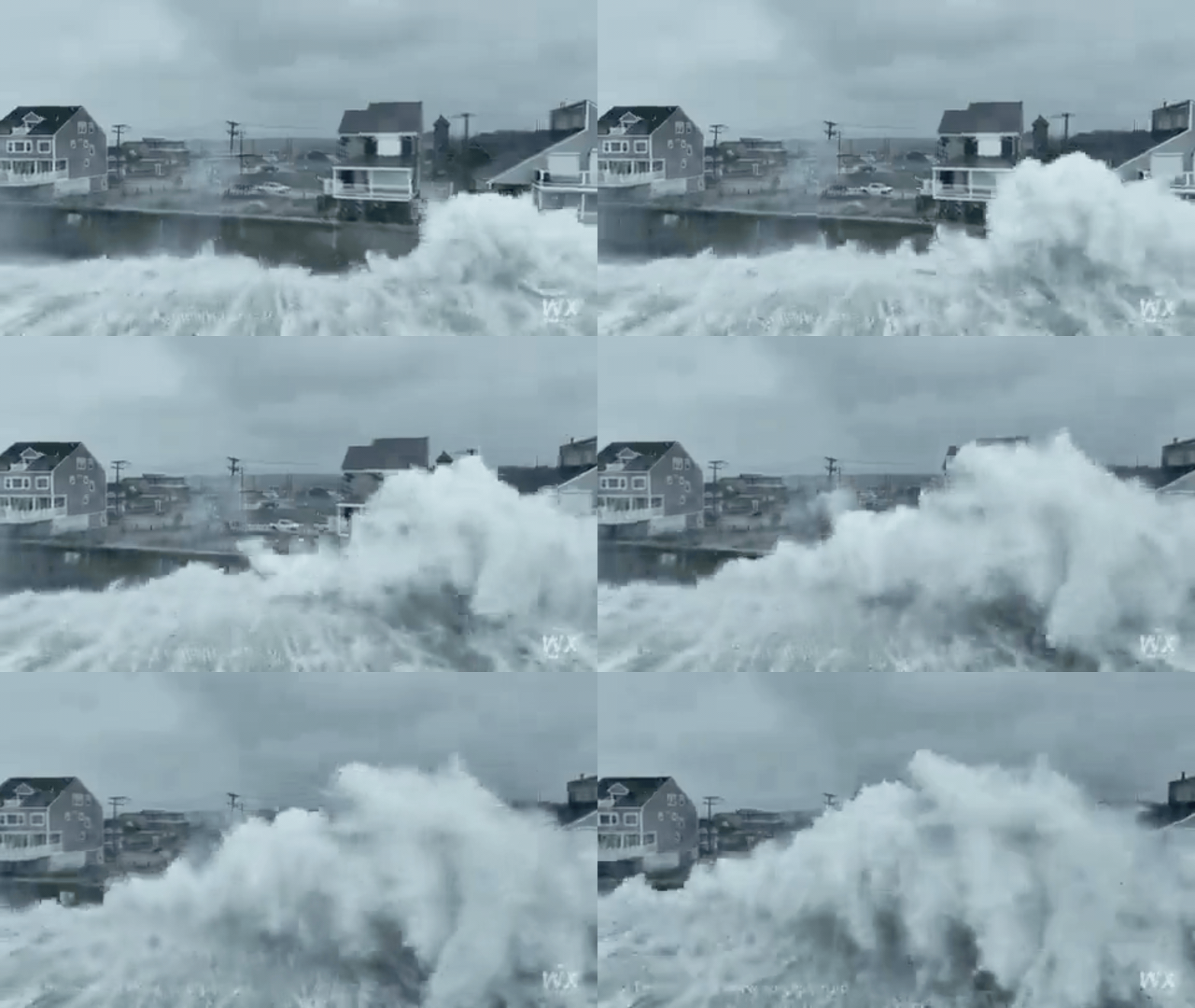
You wake up, look out the window, and see your street transformed into a muddy canal. That is the reality thousands of people across the US East Coast are facing as a punishing nor'easter locks the region in a chokehold. We are talking about destructive 20-foot waves, fierce winds knocking out power to over 100,000 homes, and tidal flooding that has residents breaking out kayaks in New Jersey and New York streets.
If you are wondering why this particular storm feels so vicious and refuses to leave, you are not alone. Let's look at what is actually fueling this meteorological monster.
What Makes a Nor Easter So Dangerous
People often confuse a nor'easter with a standard hurricane, but they are entirely different beasts. A nor'easter forms when frigid Arctic air plunging down from Canada clashes directly with warm, moisture-heavy air sitting over the Atlantic Ocean.
The name itself gives away the primary weapon: winds screaming in from the northeast off the ocean, directly slamming the coastline.
This specific system packs a triple threat that catches communities off guard:
- Relentless coastal flooding driven by astronomical high tides combined with storm surges.
- Widespread tree and power line damage from sustained high wind gusts.
- Severe beach and dune erosion that strips away natural shoreline defenses in places like Ocean City and Surf City.
Unlike a fast-moving summer storm that dumps rain and vanishes, this system is slow-moving. That means coastal areas take a prolonged beating over multiple tidal cycles instead of a single quick hit.
The Hidden Driver Behind the Chaos
Weather doesn't happen in a vacuum. While the immediate physics involve air mass collisions and pressure gradients, forecasters are pointing to a larger atmospheric backdrop: a powerful El Niño cycle.
El Niño warms ocean temperatures in the tropical Pacific, which alters global atmospheric circulation patterns. For the eastern United States, this often shifts the Pacific jet stream southward. That southward shift acts like an atmospheric conveyor belt, pumping abundant moisture and energy right into storms developing off the southeastern US coast before they march northward.
Climatological data shows that nor'easters tend to crop up more frequently and pack a heavier punch during strong El Niño years. This system arrived slightly earlier in the season than normal for a storm of this magnitude, catching local infrastructure before winter preparations were fully underway.
The Real World Impact on Daily Life
Statistics look abstract on a screen, but on the ground, the disruption is immediate and messy. Flight operations took a massive hit with hundreds of cancellations and thousands of delays rippling outward from major hubs. Commuters in Norfolk, Virginia, found themselves abandoning stalled cars in deep saltwater pools.
Events, sports fixtures, and outdoor gatherings got canceled or postponed. When water starts rising inside residential living rooms and displacing family belongings, normal life grinds to a halt.
How to Prepare Before the Next Coastal Storm Hits
You cannot control the jet stream or stop a nor'easter from forming, but you can stop flat-footed when the next severe coastal weather event rolls in.
- Secure loose outdoor items immediately. High winds turn patio furniture, trash cans, and garden decorations into flying hazards.
- Move vehicles to higher ground. If you live in a known flood-prone or low-lying bayside community, get your car away from street level before the tide peaks.
- Build an emergency kit now. Keep bottled water, non-perishable food, flashlights, and portable phone chargers ready before the power grid fails. Do not wait until the lights flicker out.
- Stay off flooded roads. It takes only a few inches of moving water to sweep a vehicle away or hide dangerous sinkholes and downed electrical wires. Turn around, don't drown.