Most people think nuclear fusion is a distant science fiction dream plagued by runaway costs, radioactive waste, and impossible containment hurdles. They picture multi-billion dollar government projects stuck in endless testing loops. But a private commercial firm in China just quietly changed the trajectory of the entire industry.
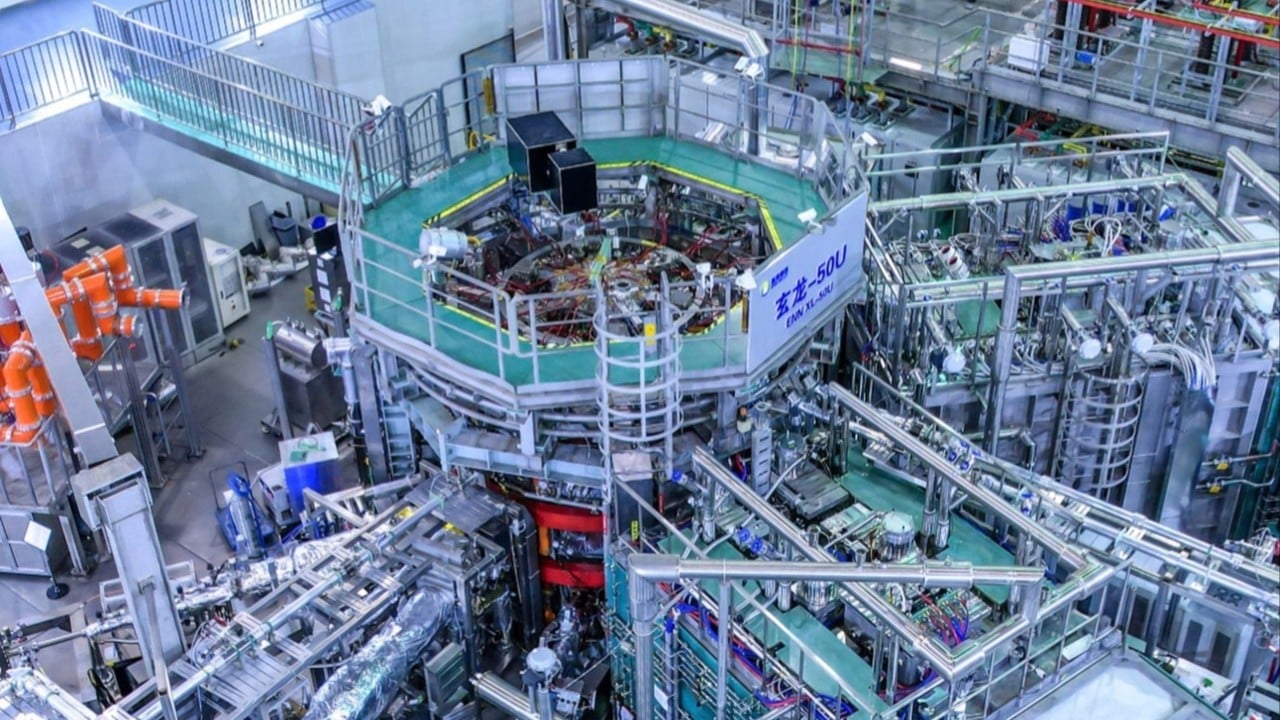
ENN Group, operating out of Langfang in Hebei province, announced that its EXL-50U spherical device successfully achieved hydrogen-boron fusion reactions. This is a massive deal. It marks the very first time a private commercial fusion company has pulled off a hydrogen-boron fusion reaction on its own hardware. Forget deuterium-tritium for a second. This is cleaner, safer, and entirely changes how we think about the future of power. In related news, we also covered: Why Tech Ceos Are Facing The Australian Senate Over Rogue Ai Bots.
Why Hydrogen Boron Changes the Rules
If you've followed fusion for more than five minutes, you know the standard playbook relies on deuterium and tritium. It's the "easy mode" of nuclear physics, and it still cannot run a stable power plant. Why? Because D-T fusion showers reactors in high-energy neutrons. Those neutrons destroy reactor walls, create radioactive waste headaches, and require massive shielding.
Hydrogen-boron, or proton-boron 11, takes a totally different path. When a hydrogen proton smashes into a boron-11 nucleus, it creates helium nuclei—alpha particles—and pure energy. Ars Technica has also covered this fascinating issue in great detail.
No high-energy neutrons. No long-lived radioactive waste. No structural decay eating away at your reactor core.
It's called aneutronic fusion. The energy carrier is charged particles rather than destructive radiation. That means you can theoretically capture that energy directly using magnetic fields instead of boiling water to turn a turbine.
The Brutal Physics Problem Everyone Ignores
Let's be completely honest. If hydrogen-boron is so clean, why isn't everyone running power plants on it?
Because the physics are brutal.
The ignition energy required for a proton-boron reaction is roughly eleven times higher than D-T fusion. You need much higher plasma temperatures and extraordinary confinement capabilities. Many physicists dismissed hydrogen-boron as a dead end because the radiation losses are severe, and keeping the plasma stable under those conditions is an elite-tier challenge.
That's why ENN's achievement with the EXL-50U spherical tokamak matters. Achieving high-parameter hydrogen-boron plasma control means they managed to squeeze and contain that volatile soup long enough for the reaction to occur. It proves the hardware can handle conditions that skeptics claimed were too hostile for a compact device.
The Commercial Timeline and What Comes Next
We shouldn't pretend we're plugging our homes into a boron reactor tomorrow. Fusion happened, but fusion power generation is a different beast entirely. We are looking at a clear roadmap rather than an overnight revolution.
ENN has laid out a precise three-step commercialization plan:
- Phase One (Achieved): Hit hydrogen-boron fusion reactions on the EXL-50U spherical device.
- Phase Two (Targeted for 2027): Build the next-generation Helong-2 device to target actual hydrogen-boron power generation by 2030.
- Phase Three (Before 2035): Scale up to low-cost commercial power generation and establish full demonstration reactors.
Other private players like TAE Technologies in the US and Marvel Fusion in Germany are chasing this exact same mountain. But ENN crossing this experimental threshold first gives the private sector a major psychological and technical push.
What This Means for Global Energy Markets
The race for clean energy isn't just about throwing up more solar panels and wind turbines, though those are doing the heavy lifting right now. Base-load power is the final boss of the green transition. When the sun goes down and the wind stops blowing, grids need reliable, high-density energy.
Traditional nuclear fission provides that, but public anxiety over meltdowns and spent fuel keeps it politically charged. Coal and gas are out if we want to hit climate targets. Aneutronic fusion solves every single one of those friction points. Boron is abundant, cheap, and non-toxic. The fuel supply is practically endless.
If companies like ENN can turn a clever plasma control experiment into a working kilowatt of electricity by 2030, the global energy landscape will flip upside down.
Keep a close eye on the engineering data coming out of Hebei over the next twenty-four months. The transition from lab bench to prototype reactor is where most fusion dreams go to die. If the Helong-2 platform stays on schedule, we might actually witness the birth of limitless clean energy in our lifetimes. Stop writing fusion off as a perpetual thirty-years-away punchline. The timeline just accelerated.