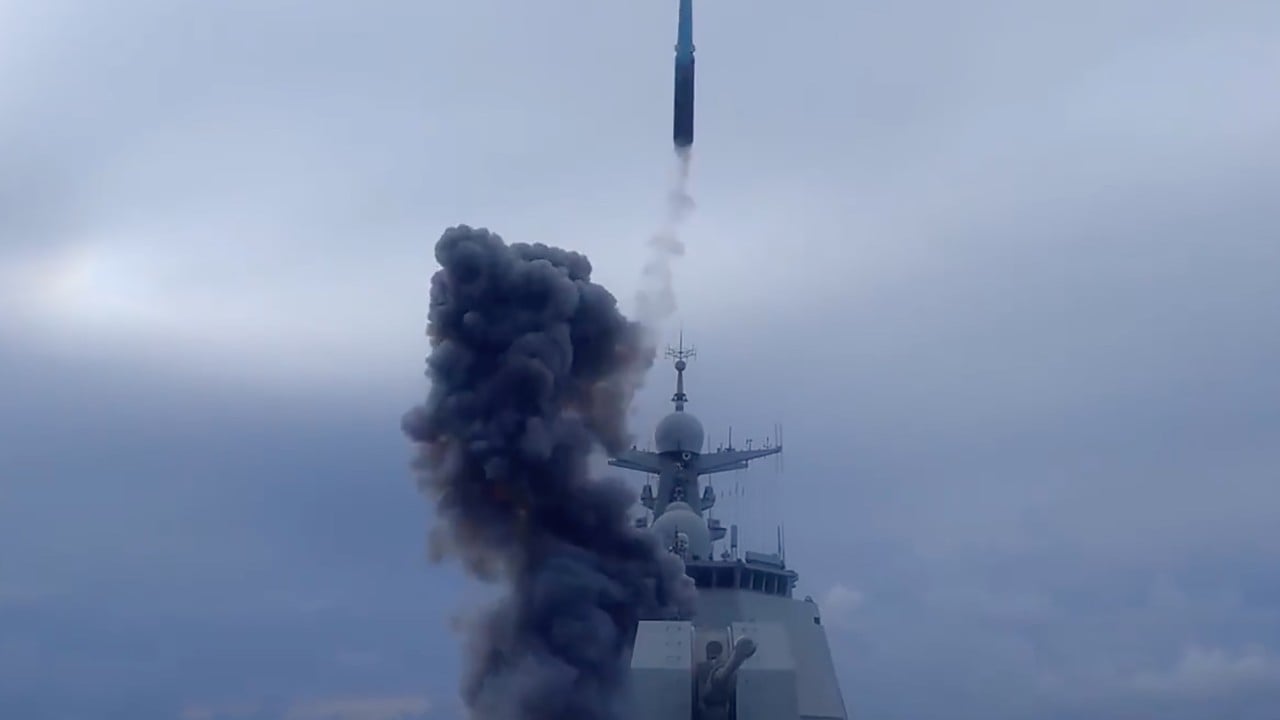
Forget everything you think you know about slow military build-ups. While Western defense strategists spend years debating budgets and procurement delays, China's shipyards are turning out modern surface combatants at a blistering pace. At the center of this maritime expansion sits the Type 052D destroyer, a warship class that has quietly become the backbone of the People's Liberation Army Navy (PLAN). With over 35 hulls now in service—including recent additions like the Tongchuan and Loudi—these destroyers are actively altering how power is projected across the Western Pacific.
If you want to understand why Washington's military planners are losing sleep, you don't need to look at massive aircraft carriers alone. You need to look at the sheer industrial throughput and modular evolution of ships like the Type 052D.
The Industrial Machine Behind the Fleet
The real story isn't just about a single ship; it's about manufacturing scale. China's shipbuilding capacity completely dwarfs current U.S. output. While the U.S. Navy has struggled to push out Arleigh Burke-class destroyers at a matching tempo, Chinese state-owned shipyards in Dalian and Shanghai have maintained a steady, predictable drumbeat of production.
This isn't haphazard manufacturing either. The Type 052D program represents a masterclass in iterative design. Instead of pausing production every few years to chase radical, unproven redesigns, Beijing has stuck with a proven hull form while continuously upgrading the software, sensors, and internal architecture.
Take the Type 052DL variant, for example. Engineers stretched the hull by roughly four meters to accommodate an enlarged flight deck and hangar. That small tweak wasn't just aesthetic—it allowed the navy to deploy the Harbin Z-20F naval helicopter, massively boosting the fleet's anti-submarine warfare reach and sensor endurance compared to older airframes.
Muscle and Missiles in Contested Waters
Displacing around 7,500 tons, the Type 052D is built for serious blue-water combat. It relies on a 64-cell universal vertical launch system split across the bow and stern. This setup lets the ship pack a lethal mix of munitions:
- HHQ-9B surface-to-air missiles for area air defense.
- YJ-18 anti-ship cruise missiles for taking down surface targets.
- CJ-10 land-attack missiles for long-range strike options.
Coupled with active electronically scanned array (AESA) radar systems—featuring upgraded dual-face rotating configurations on newer hulls—these destroyers boast incredible target tracking and electronic warfare resistance. When you're operating in dense electromagnetic environments near Taiwan or the South China Sea, that kind of sensor fusion is non-negotiable.
These ships aren't just defensive placeholders either. Recent long-range drills breaking through the First Island Chain into the Western Pacific show that Beijing is using these destroyers to test far-seas operational capabilities. They routinely escort carrier strike groups or act as independent command nodes, coordinating air defense and tactical data across naval task groups.
Shifting the Regional Balance
What does this mean for the future of the Western Pacific? It shifts the math of attrition.
In a regional conflict, missile density and hull numbers matter immensely. By flooding the zone with dozens of advanced, networked multi-role destroyers, the PLAN can establish overlapping air-defense umbrellas and sustain high-tempo operations far from mainland supply lines. It narrows the qualitative gap that the U.S. Navy and its regional allies have relied upon for decades, replacing it with a quantitative and operational parity that is difficult to counter.
Beijing's naval modernization isn't an experimental phase anymore. It's an established, industrial-scale reality that is reshaping maritime power from the Yellow Sea down to the Second Island Chain.