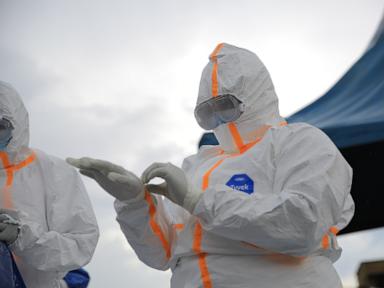
The numbers are staggering. The Democratic Republic of Congo is facing a severe shortage of medical personnel as history's fastest-growing Ebola outbreak continues to spread across seven provinces. With confirmed cases topping 7,773 and fatalities reaching 3,759 according to official government tallies, the World Health Organization is sounding alarms. Treatment beds are being constructed daily, but thousands of trained professionals are missing from the front lines.
If you want to understand why this epidemic remains completely out of control, you have to look beyond simple viral transmission. You have to look at the human resource crisis crippling the response on the ground.
The Human Resource Bottleneck in North Kivu
Building an Ebola treatment center is easy compared to staffing it. Anne Ancia, the WHO representative in Congo, points out that a single facility requires roughly 300 health professionals. This team must include general practitioners, nurses, hygienists, and anesthetists. Right now, those hands simply aren't there.
In eastern North Kivu province, confirmed infections surged by a terrifying 73% over a three-week window. While provinces like Ituri and Haut-Uele saw localized drops in cases between late August and September, transmission patterns remain wildly erratic. The virus is spreading faster than health agencies can recruit.
WHO technical officer Luca Fontana notes that while nearly 1,400 treatment beds are active across 59 centers, an additional 1,600 beds are urgently required. Because roughly three health workers are needed for every single patient bed, the math is brutal. The response demands thousands of newly trained staff who don't exist in the local pipeline, and global donor funding cuts have severely choked off the pool of international organizations capable of deploying.
Why Workers Are Striking and Why Pay Matters
You can't expect medics to risk their lives without a paycheck. Frontline workers in Ituri previously went on strike over unpaid wages, grinding critical parts of the response to a halt.
Health Minister Roger Kamba attempted to clean up payroll lists after discovering that individuals completely uninvolved in the Ebola response had slipped onto government rosters. While officials promised to clear the resulting arrears, many workers received only partial payments or nothing at all. When wages dry up during a deadly epidemic, staff walk away. Trust vanishes instantly. Without financial security and reliable hazard pay, recruitment stalls out entirely.
The Invisible Threat Facing Children Under Five
Children are bearing the brunt of this crisis, and the statistics are heartbreaking. The case fatality rate for kids under five exceeds 60%, compared to roughly 40% for adults.
According to WHO emergency director Marie Roseline Belizaire, diagnosing young children is exceptionally difficult. Toddlers cannot clearly articulate their symptoms, and the physical presentation of the virus often mimics other common childhood illnesses in the region. By the time parents realize what's happening, the infection has often progressed too far for standard interventions to save them.
What Needs to Happen Next
Throwing money at an epidemic doesn't fix it if the infrastructure is broken. Fixing this emergency requires immediate, direct action:
- Audit and expedite payrolls to ensure every single frontline nurse and doctor receives hazard pay on time without bureaucratic delays.
- Scale up decentralized community care units closer to hard-hit rural clusters in North Kivu to catch cases earlier, particularly among vulnerable infants.
- Expand local training fast tracks to bridge the massive gap in skilled medical personnel without relying solely on strained international aid pipelines.
Stop ignoring the administrative failures behind public health disasters. Until the people treating the sick are protected, paid, and supported, this outbreak will keep marching forward.
Ebola Outbreak In DR Congo: WHO Warns Of Critical Shortages
This video provides an in-depth look at the severe shortages of trained healthcare workers and operational resources hindering the Ebola response in the Democratic Republic of Congo.