Foreign policy rarely shifts on a dime, but when Donald Trump speaks to reporters outside the White House, calculations change instantly. The administration has officially slammed the door on a diplomatic opening proposed by Tehran at the United Nations. Iran's leadership thought they had a workable framework via Qatari mediators to reopen the choked Strait of Hormuz and halt seven months of grinding regional warfare within a tight seven-day window. Trump brushed it aside. He claimed the United States is winning tremendously and that Tehran is simply feeling the severe economic squeeze of its own blocked ports.
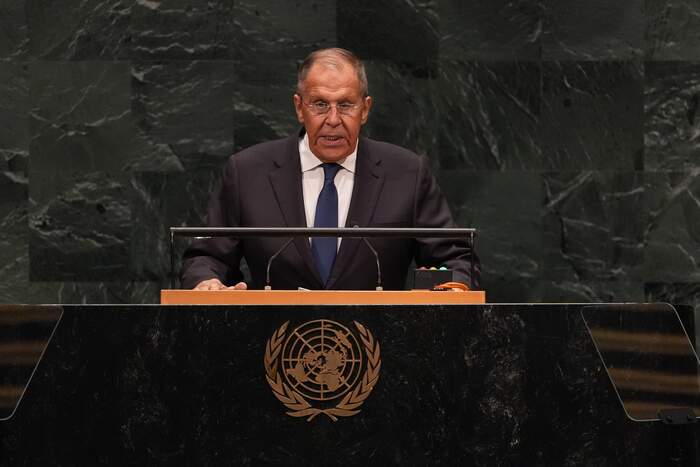
If you look past the standard political posturing, this rejection reveals a much larger calculus governing Washington's approach to the Middle East right now. The conflict didn't start in a vacuum; it erupted after joint US and Israeli military strikes targeted Iranian infrastructure back in late February. Since then, the naval chokehold in the Persian Gulf has strangled global oil flows and forced shipping companies to reroute millions of barrels around Africa, inflating energy costs worldwide. Iran's foreign minister, Abbas Araqchi, insisted at the UN that everything was prepared for an immediate de-escalation if Washington showed genuine intent. Instead, Washington dug its heels in.
Why would a president reject an apparent off-ramp when energy markets are jittery and voters are tired of endless foreign entanglements? The answer lies in leverage and domestic political timing. According to reports leaking from intelligence and diplomatic circles, senior officials remain deeply skeptical that Tehran will compromise on its nuclear ambitions, regardless of what they sign regarding maritime navigation. Privately, insiders point out that military planners are already gaming out scenarios for a renewed and heavier bombing campaign scheduled for after the upcoming US congressional midterm elections.
This brings us to the core tension driving the current crisis. Iran's economy is bleeding out. Without consistent oil revenues flowing through the Strait of Hormuz, the government in Tehran faces mounting internal pressure from a population weary of inflation, currency collapse, and constant security crackdowns. Iranian officials calculated that trading maritime access for sanctions relief would buy them breathing room. But Washington smells blood in the water. Trump's core argument is simple: why settle for a compromised ceasefire when the economic blockade is actively crushing the regime's long-term capabilities?
The Strategic Reality of the Strait of Hormuz
The Strait of Hormuz is the world's most critical energy chokepoint. Nearly a fifth of all global petroleum consumption passes through its narrow waters daily. When Iran effectively closed off safe passage through asymmetric naval threats and sea mines, global markets panicked. The subsequent economic blockade imposed by the US aimed to starve Tehran of foreign currency while keeping international shipping lanes open by sheer force.
Yet, controlling a narrow maritime passage against asymmetric threats is remarkably difficult. While the White House insists the US Navy maintains total dominance, commercial insurers view things differently. Premiums for tankers navigating the Persian Gulf have skyrocketed to historic highs. Ship captains are operating under constant threat of drone strikes or fast-attack boat swarms operated by the Islamic Revolutionary Guard Corps.
Iran's diplomatic outreach was an acknowledgment of this friction. By offering to lift restrictions on the strait in exchange for a wider dialogue, Tehran hoped to fracture the Western coalition and preserve its nuclear infrastructure. Iranian negotiators made it clear behind closed doors that their uranium enrichment program remains entirely off-limits. They will bargain over shipping lanes, but they will not bend on the bomb. That red line is precisely why Trump walked away.
What Happens After the Midterms
Elections dictate policy rhythms in Washington, and 2026 is no exception. Domestic political considerations heavily influence foreign adventures and restraint alike. Pushing a major military escalation before voters head to the polls carries immense risks, particularly if oil prices spike unpredictably at the pump. By keeping diplomatic channels technically open—even while publicly rejecting them—the administration manages public expectations while keeping military options loaded in the chamber.
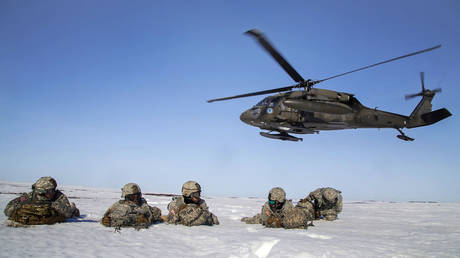
Behind the scenes, military commanders are preparing for a potential phase-two campaign if Tehran refuses to capitulate entirely. Unlike the initial strikes in February, which focused primarily on degrading conventional missile batteries and air defense networks, future operations could target deeper economic nodes, cyber infrastructure, and remaining naval assets.
The regional fallout is already spreading far beyond the Persian Gulf. Iranian-backed proxies, including Houthi forces in Yemen and various militias across Iraq and Syria, continue to test air defense systems around US bases and allied Gulf states. Saudi Arabia and the United Arab Emirates find themselves caught in a dangerous balancing act, engaging in backchannel talks with Tehran while relying on American military protection.
Navigating the Uncertainty Ahead
If you are tracking international markets, supply chains, or geopolitical risk, the takeaway from this diplomatic standoff is clear. Do not expect a quick diplomatic resolution in the Middle East. The fundamental demands of Washington—complete surrender of nuclear enrichment rights coupled with verifiable regional demilitarization—are diametrically opposed to Tehran's survival strategy.
Prepare for continued volatility in energy prices and maritime shipping insurance rates. Businesses reliant on international supply chains through the Middle East must maintain diversified routing alternatives. The window for a negotiated settlement has closed for now, replaced by a high-stakes game of economic attrition that will define the rest of the year. Keep a close eye on post-election political signals out of Washington, because the next phase of this conflict is already being drawn up on military maps.