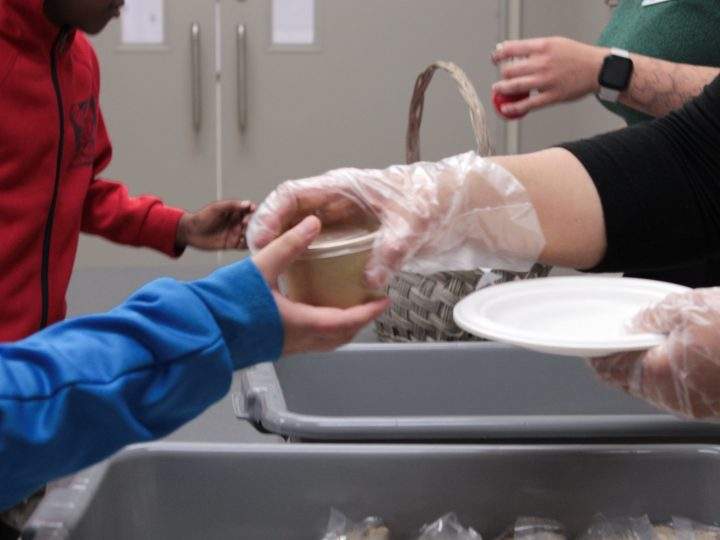
Hunger makes paying attention impossible. If you haven't sat through a morning shift with an empty stomach, you can't imagine how loud a lack of food screams in a child's head. Teachers see it every single day. A student gets quiet, checks the clock, or stops participating altogether.
Edmonton Meals on Wheels is stepping up to fix this exact problem. For decades, the organization focused primarily on seniors and individuals facing physical barriers to food access. Now, they are shifting their operational weight toward local classrooms.
Inside the Edmonton Meals on Wheels Student Initiative
The pilot program currently runs at St. Teresa of Calcutta Elementary School. Located in the Boyle Street neighbourhood just east of downtown Edmonton, this inner-city school deals directly with the pressures of urban food insecurity.
Meals on Wheels provides hot and cold lunches to every student at the school four days a week. Adam Zawadiuk, the executive director of Edmonton Meals on Wheels, noted that the organization wanted an opportunity to expand who they serve. The reality is simple. Too many kids across the city go to school without access to proper nutrition.
Families face skyrocketing grocery prices. Inflation stretches household budgets past the breaking point. When rent and utility bills consume the paycheck, food is often the first expense people try to squeeze.
Why Nutrition Changes Everything in the Classroom
Food insecurity does not just cause hunger. It wrecks academic performance, attendance, and behavioral stability.
Cheryl Shinkaruk, manager of programs and projects with Edmonton Catholic Schools, explains that the student response has been overwhelmingly positive. When children get predictable, nutritious meals during the school day, everything changes. They focus better. They engage with lessons. They participate without the heavy distraction of an empty stomach.
You cannot learn math or literature when your body lacks fuel. The basic hierarchy of needs dictates that survival and sustenance come first. Programs like this bridge the massive gap between poverty and educational potential.
The Logistics and the Push for Expansion
Running a massive meal delivery operation requires intense infrastructure. Meals on Wheels has the kitchens, the transport network, and the logistical know-how from fifty years of operation. Scaling that up to support schools takes careful coordination with local school divisions.
The current pilot at St. Teresa of Calcutta is just the beginning. Zawadiuk has made it clear that the organization possesses the kitchen capacity and the desire to expand further. Edmonton has dozens of other schools where students experience similar barriers.
Meeting this broader demand requires community backing. Organizations need reliable funding, steady food supply chains, and volunteer drivers to keep the wheels turning.
How You Can Support Local Student Nutrition
If you want to help tackle student hunger in Edmonton, don't wait for someone else to step in. Charities working on the ground need direct community investment.
- Volunteer your time: Sign up with Edmonton Meals on Wheels to help transport food safely to schools and homes.
- Donate directly: Financial contributions fund kitchen ingredients and meal prep materials much more efficiently than canned food drives.
- Spread awareness: Talk about local food insecurity openly. Push for sustained public-private funding models that keep school lunch programs permanently funded.
Hungry kids can't wait for red tape to clear. Support local food initiatives today and keep classrooms focused on learning.