Political symbols carry massive weight, and few events test French state secularism quite like a papal visit. When Pope Léon XIV toured France in late September 2026, the dance card between the Élysée Palace and the Vatican generated endless friction. Initially, reports insisted that Emmanuel Macron would skip every single liturgy, keeping strict adherence to the 1905 law on the separation of church and state. Yet, as the itinerary rolled out toward its final stop in Moselle, things shifted.
If you followed the headlines, you watched the narrative pivot in real time. Let us look at why this happened, what the protocol actually looks like, and why political leaders can never truly separate high-stakes diplomacy from religious optics.
Breaking Down the Metz Protocol
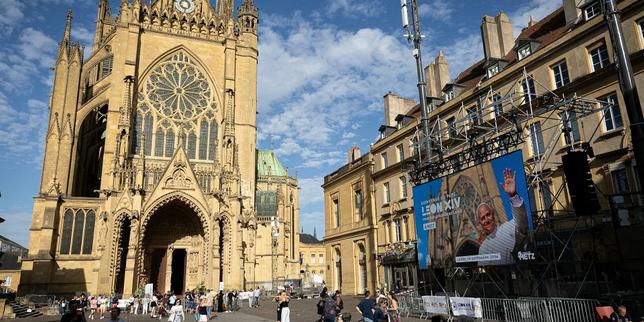
Metz was always going to be the grand finale of the pope's September 25-28 journey. While Paris and Lourdes handled the earlier legs, the trip concluded at the Saint-Étienne cathedral in Metz, drawing thousands of faithful alongside 26 European leaders whom Macron personally invited for a high-level political speech by the sovereign pontiff.
Originally, the line from government advisors was clean-cut: the president welcomes the head of state on French soil, but avoids church pews to dodge domestic uproar over laïcité. Critics immediately jumped on the stance. Some commentators called the avoidance petty; others argued it was an absolute constitutional duty.
Then reality set in. Diplomacy isn't run by rigid formulas. When you host a global religious leader who is simultaneously addressing the future of Europe alongside dozens of heads of state, isolation becomes impossible. Macron's presence at the cathedral mass wasn't just a casual drop-in; it marked a calculated adjustment to heavy geopolitical currents.
The Real Cost of Skipping Liturgy
Let’s be honest about how these decisions get made behind closed doors. When news breaks that a French president will boycott a papal service, both sides lose. The Vatican notices the cold shoulder, and conservative domestic voters cry foul.
Macron loves big European stages. By bringing 26 regional leaders to Metz for Léon XIV’s address on European unity, the administration created a hybrid event that blurred the lines between statecraft and spiritual gathering. Once you invite half of Europe to listen to a papal speech on the steps of a Gothic cathedral, sitting out the actual mass starts looking less like principled laïcité and more like awkward backtracking.
You have to manage the fallout carefully. If you look at past visits—such as previous papal stops in Marseille or Paris—presidents walk a razor-thin line. Step too close to the altar, and you violate republican neutrality. Stay too far away, and you insult a major cultural institution and alienate millions of citizens.
What This Tells Us About 2026 Politics
We are living in an era where symbolic gestures drown out boring policy discussions. Macron's late adjustment in Metz proves that political survival often requires bending rigid doctrines when the optics demand it.
Think about the common mistakes pundits make when analyzing these visits. They assume politicians act purely on ideology. They don't. They act on pressure. When the schedule shifted to include his presence at the cathedral celebration, it reflected a compromise between avoiding domestic criticism from Catholic constituencies and maintaining international face.
If you want to understand how modern governance actually operates, stop looking at the official rulebooks and start watching the last-minute schedule updates. That is where the real decisions get made. Plan your next moves accordingly, because state optics will only get weirder from here.