You would think that punishing billionaires accused of funding a war would be straightforward. It is not. The European Union recently agreed to extend its broad restrictive measures on thousands of Russian individuals and entities, but it came with a heavy compromise. Billionaires Alisher Usmanov and Mikhail Fridman were quietly dropped from the blacklist.
This decision exposed deep fractures, diplomatic horse-trading, and raw frustration across the bloc. When national self-interest clashes with geopolitical solidarity, Europe usually blinks. If you enjoyed this post, you should look at: this related article.
Behind the Closed Doors of Brussels
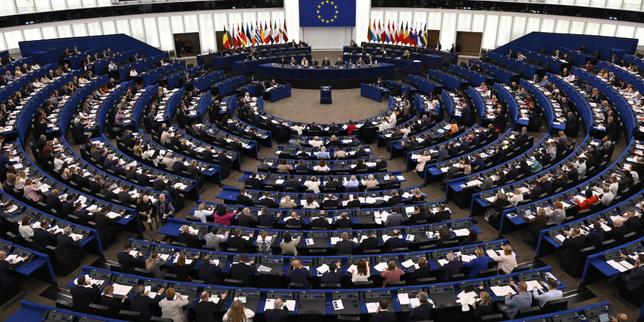
The renewal of European sanctions requires absolute unanimity among all 27 member states. Because the entire sanctions package has to be re-approved every six months, it acts as a recurring vulnerability. Any single government can hold the entire framework hostage to extract concessions on completely unrelated matters.
That is precisely what happened during the latest round of intense negotiations. Slovakia initiated the push, but the real shock came when France and Luxembourg intervened for their own domestic and diplomatic reasons. Paris reportedly pushed for the removal of Alisher Usmanov—a metals and mining mogul often described as a favored business figure close to the Kremlin—after pressure linked to foreign detainees. Luxembourg similarly championed Mikhail Fridman, the co-founder of Alfa Group, while facing massive legal arbitration pressures. For another perspective on this development, see the latest coverage from USA Today.
Other members of the bloc reacted with fury. Baltic states, including Latvia and Lithuania, alongside Ukraine, argued that exempting high-profile oligarchs rewards coercive diplomacy and sets a terrible precedent. Kyiv condemned the move as entirely unacceptable, pointing out that softening restrictions sends the wrong message while Russian attacks continue unabated.
Who Are Alisher Usmanov and Mikhail Fridman?
To understand why their removal sparked such outrage, you have to look at why they were targeted in the first place. Following the full-scale invasion of Ukraine, the EU, the United Kingdom, and the United States rushed to lock down the assets of individuals who form the backbone of Russia's economic establishment.
Alisher Usmanov built an empire spanning technology, mining, and telecommunications, accumulating a fortune worth over sixteen billion dollars. European officials previously labeled him a pro-Kremlin business figure entrusted with managing sensitive financial flows and solving personal business problems for top leadership. Though Usmanov consistently denied these characterizations and launched multiple legal battles to clear his name, his vast resources made him a primary symbol of Russian wealth parked in the West.
Mikhail Fridman faced similar restrictions due to his deep integration within Russia's corporate infrastructure, particularly through Alfa-Bank and various retail and investment assets. While some European courts previously questioned certain aspects of earlier procedural steps, Ukrainian security services subsequently launched criminal probes accusing Fridman's corporate networks of channeling substantial funds to support Russian industrial defense complexes and supply troops.
Despite living under heavy restrictions and seeing their megayachts and luxury mansions frozen or seized across Europe, both men retained immense legal firepower to fight back.
The Cost of Unanimity
To salvage the broader sanctions framework—which covers roughly 3,000 individuals and entities—the EU accepted a bitter pill. In exchange for dropping Usmanov and Fridman, diplomats agreed to extend the remaining asset freezes and travel bans for an unprecedented three-year duration instead of the standard six-month or one-year rollovers.
Proponents of the deal argue this secures long-term stability and prevents the entire sanctions regime from collapsing completely if a veto is threatened again next season. Critics counter that trading away two major targets signals weakness. When geopolitical enforcement becomes subject to bilateral ransom demands, the credibility of the entire system takes a permanent hit.
Europe wanted to project unbreakable unity against Moscow's aggression. Instead, the carve-out for Usmanov and Fridman proves that commercial and diplomatic leverage still overrides collective moral resolve when the pressure gets high enough.