When Donald Trump rolls out the red carpet, he does it with maximum theatrical flair. That was precisely the scene at the White House when Chinese President Xi Jinping arrived for a high-stakes state visit. Forget standard diplomatic handshakes in quiet hallways. This meeting came packed with military ceremonies, a star-studded state dinner in the East Room, and high-level talks tackling trade, artificial intelligence, and geopolitical flashpoints like Taiwan.
If you want to understand where U.S.-China relations are heading, you have to look past the flashing cameras and examine what actually happened behind closed doors. Both leaders understand they operate under vastly different political systems, yet they spent hours negotiating practical guardrails for the world's two largest economies.
The Grand Arrival and Visual Politics
Optics matter immensely in modern geopolitics. Trump chose to host Xi with an elaborate military arrival ceremony on the South Lawn, complete with the national anthems of both nations echoing across Washington. Trump even gave Xi a personal tour, showing off Marine One and his newly constructed helipad before diving into serious business.
This pageantry serves a clear purpose. Trump likes to project personal rapport and strength, framing international relations through direct leader-to-leader diplomacy. Xi, meanwhile, stepped into the capital with a composed demeanor, accompanied by his wife, Peng Liyuan, ready to project China's unwavering status as an equal global superpower.
Tech Titans at the State Dinner
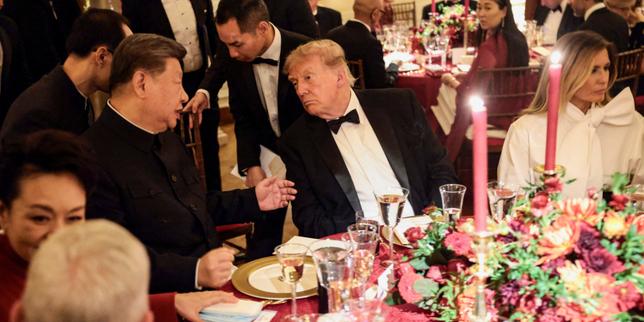
The real power signaling happened inside the East Room during the state dinner. While guests dined on yellow squash velouté and sesame-crusted sea bass served on historic Ronald Reagan-era red china, the guest list told a fascinating story.
Silicon Valley royalty packed the room. OpenAI CEO Sam Altman, Nvidia CEO Jensen Huang—who famously swapped his signature black leather jacket for a tuxedo—Amazon founder Jeff Bezos, Tesla and SpaceX CEO Elon Musk, and Alphabet CEO Sundar Pichai were all in attendance.
Having these specific tech titans present wasn't an accident. Artificial intelligence, semiconductor supply chains, and technological dominance sit at the very center of current U.S.-China friction. By placing these billionaires in the room with the top political leadership, the summit underscored that the future of tech regulation and trade hangs in the balance of these exact diplomatic conversations.
Hard Truths on Trade and Taiwan
Behind the lavish menu and the construction tour of Trump's massive new South Lawn ballroom project, real disagreements remained on the table. Trade imbalances continue to frustrate Washington, while Beijing maintains strict positions regarding sovereignty and Taiwan.
Trump publicly praised his ongoing relationship with Xi, telling attendees that the two countries have "never gotten along better." Yet, economic analysts know that a flashy state dinner doesn't automatically erase structural tariffs, export controls on advanced chips, or long-standing security disputes in the South China Sea.
Xi's visit proves that both superpowers are locked in a complex dance of strategic competition paired with unavoidable economic interdependence. They can't afford a complete decoupling, but neither side is willing to blink on core national security interests.
Keep a close eye on how the agreements forged during these talks translate into policy over the next few months, particularly regarding tech export restrictions and bilateral trade volumes.