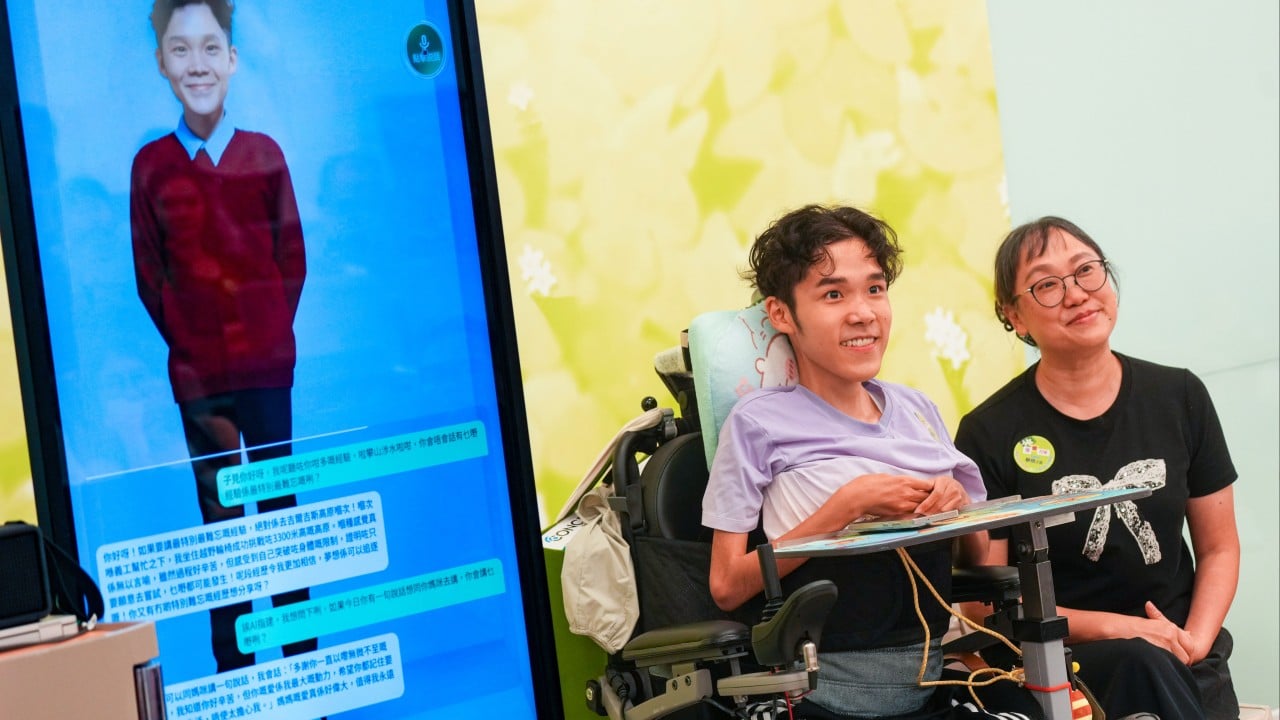
Mortality has a way of showing up early for some people. Chen Tsz-kin spent years staring down a medical timeline that flatly stated he wouldn't make it past his eighteenth birthday. Diagnosed with a severe muscle-wasting condition known as Duchenne muscular dystrophy, his physical world has steadily shrunk. Muscles weaken. Mobility fades. Doctors hand out grim statistical averages like weather reports.
Instead of accepting quiet erasure, Tsz-kin did something radically different. Standing at the University of Hong Kong just weeks before turning eighteen, he introduced the world to "AI Tsz-kin". It's a digital avatar built to outlive his physical body. This isn't corporate tech hype or a Silicon Valley product launch. It's a personal survival strategy against time itself.
The Reality of Racing Against a Terminal Clock
We talk about artificial intelligence like it's only useful for writing emails or generating corporate stock photos. That misses the point entirely. For people dealing with terminal degenerative illnesses, digital tools offer a literal lifeline to permanence.
Duchenne muscular dystrophy is relentless. It strips away independence piece by piece. When you know your physical expiration date is mapped out by medical statistics, your perspective changes. You stop worrying about minor inconveniences. You start thinking about legacy.
Tsz-kin's project wasn't born out of a desire for tech trends. It came from a simple, urgent question: How do you keep your voice alive when your body stops working? His digital twin is designed to carry forward his lived experiences, his voice, and his message of unyielding perseverance long after he's gone.
How Digital Avatars Are Changing End-of-Life Planning
Building a digital likeness used to require movie studio budgets and Hollywood soundstages. Today, machine learning models, voice cloning tools, and neural rendering have democratized the process. Anyone with a computer and a compelling reason can synthesize speech patterns and facial expressions.
Critics often dismiss these projects as morbid or uncanny. They miss the human core underneath. When a teenager builds an artificial intelligence avatar to tell his story, he's taking control of his narrative. He refuses to let a disease have the final word.
- Preserving Voice: Audio models capture cadence, tone, and emotional inflection from limited voice recordings.
- Visual Mapping: High-definition neural renders replicate facial expressions and gestures.
- Narrative Control: The individual decides what stories, warnings, and lessons get passed down.
This tech shifts the paradigm of legacy. Historically, only the famous, the wealthy, or writers left behind detailed records of their existence. Now, everyday people can encode their personalities into archives that interact, speak, and teach future generations.
What We Can Learn From Tsz-kin's Choice
It's easy to get bogged down by daily trivialities. We complain about bad traffic, slow Wi-Fi, or missed deadlines. Then you look at a seventeen-year-old in Hong Kong leveraging neural networks just to ensure his perspective isn't erased by biology.
It forces a stark realization. If Tsz-kin can look mortality in the eye and use code to carve out a permanent footprint, the excuses we use for staying silent or holding back look pretty hollow.
Technology is rarely neutral. It amplifies human intent. Sometimes it creates mindless distractions, but occasionally it lets someone cheat the finality of a rare disease. AI Tsz-kin stands as proof that innovation matters most when it solves deeply human problems.
Take a hard look at what you're leaving behind. Stop waiting for the right moment to share your own story, because time moves faster than you think.