Millions of old car tyres pile up in landfills or get shipped overseas every single year. Dealing with that mountain of synthetic rubber has long been a logistical headache. Then came a clever fix right underneath our tyres.
Back in 2019, transport authorities and construction firms in the UK quietly paved a stretch of the M1 motorway using an asphalt mix laced with ground-up tyre rubber. It sounds like an experimental gimmick. It wasn't. Following years of real-world trials, that specific rubber-modified asphalt secured official industry approval under BBA HAPAS Clause 942. Now, road builders can repurpose up to 750 waste tyres for every single kilometre of highway they lay down.
If you've ever wondered what happens to your old treads once a mechanic takes them off your car, the answer might soon be your local highway. Let's look at how this process actually works and why civil engineers are paying attention.
Breaking Down the Tyre Rubber Asphalt Formula
You cannot just chop up old car tyres and toss them straight into hot liquid bitumen. Chemistry doesn't work that way, and neither does heavy engineering.
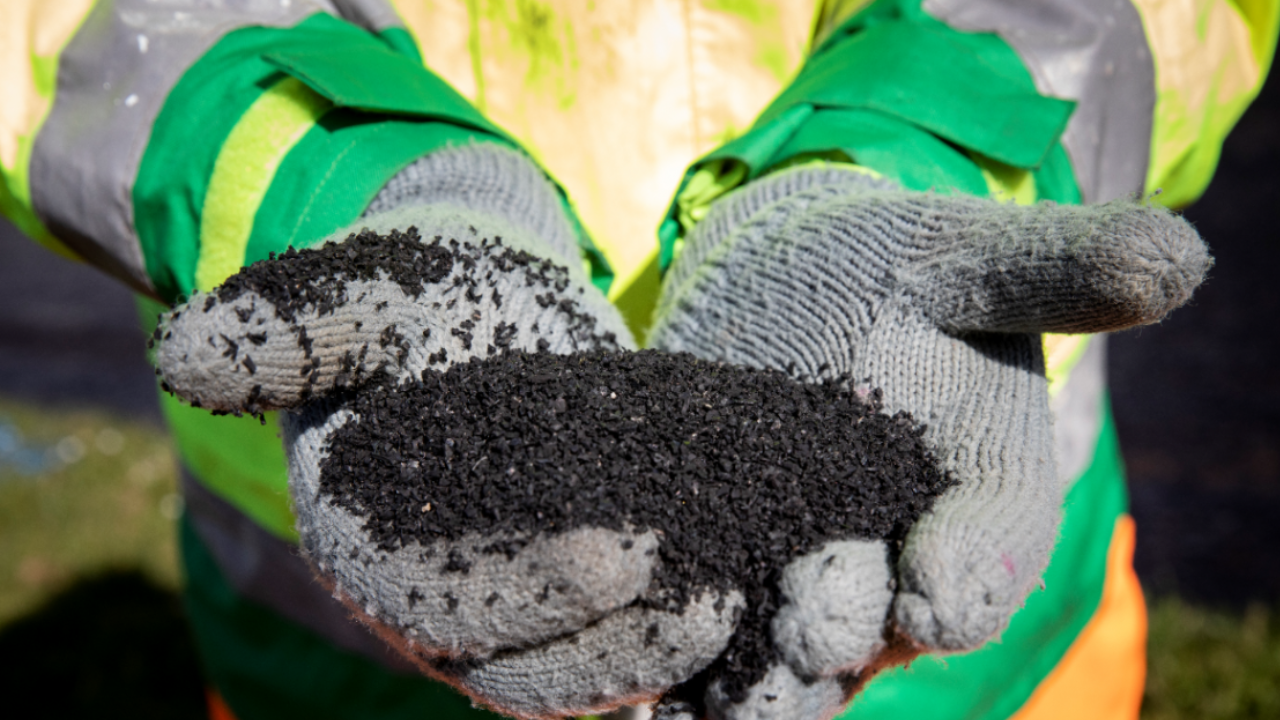
To make this mix viable for a high-stress motorway like the M1, the rubber has to undergo heavy processing. End-of-life tyres are shredded, stripped of steel belts, and ground down into tiny granules known as rubber crumb. This crumb is then blended into the stone mastic asphalt matrix.
Companies like Tarmac pioneered systems like ULTIPAVE R to test if this rubberized blend could take the daily punishment of heavy freight lorries and commuter traffic. The results surprised skeptics. The rubber doesn't make the road bouncy or soft. Instead, it adds a degree of elasticity. That elasticity helps the pavement resist cracking and rutting under extreme temperature swings and constant heavy loads.
The Numbers Behind the Recycling Claim
Let's look at the statistics that actually matter. The headline figure states that up to 750 waste tyres find a second life in every kilometre of paved surface.
Is that a universal rule? Not quite. Civil engineering rarely works on flat-rate guarantees. That 750-tyre figure depends heavily on the thickness and structural design of the specific road layer being constructed. A thin surface course on a regional bypass uses a different volume than a multi-lane heavy-duty motorway corridor.
Even with those variables, the scale is massive. Before these domestic industrial approvals, the UK exported a staggering share of its used tyres to other countries for processing or disposal. Turning motorways into domestic rubber sinks keeps that material local. It transforms a mounting environmental liability into structural infrastructure.
Combining Rubber With Warm-Mix Technology
The material science here relies on more than just throwing rubbish into pavement. Environmental gains come from how the asphalt gets manufactured in the first place.
Traditional hot-mix asphalt requires massive amounts of energy to heat rock and bitumen to extreme temperatures before pouring. Modern systems often pair rubber crumb with warm-mix technology. Lower production temperatures mean burning less fossil fuel at the plant.
When you combine lower production emissions with the direct recycling of thousands of discarded tyres, you get a rare win for industrial sustainability. It doesn't solve every environmental problem facing modern transportation networks, but it cuts down on waste exports and extends the life of high-wear road surfaces.
Next time you're stuck in traffic on a major British motorway, consider what's holding your car up. It might just be the remnants of several hundred discarded tyres quietly doing their job beneath your wheels.