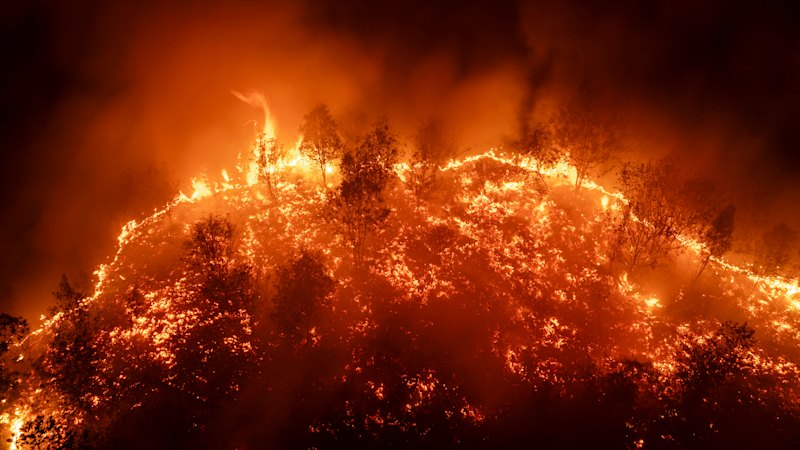
When the horizon dissolves into a suffocating amber haze, ordinary routines stop making sense. In Indonesian Borneo, millions of residents spend their days breathing carbon-choked air that turns afternoon sunlight into a murky twilight. This isn't just a seasonal anomaly. It's a high-stakes ecological crisis driven by a brutal clash between climate volatility and commercial land clearing.
The destruction runs deep. Government figures put the burned area at about half a million acres through July, but independent tracking by the Nusantara Atlas points to a staggering 2.2 million acres incinerated by August.
Inside the Smoke Zones of West Kalimantan
Walk through Pontianak or Kubu Raya, and you'll notice the silence. Market alleys sit half-empty. Merchants wipe a constant layer of fine soot off their display counters while praying for a customer or two. Staying home isn't an option when daily survival depends on small cash sales, even if the air burns your throat with every breath.
The human cost climbs by the week. The Indonesian Health Ministry reported nearly 175,000 cases of acute respiratory infections across affected regions during a single month-long stretch, with young children making up roughly a quarter of those totals. Volunteer firefighters like Tresna Waniati battle exhaustion and lung infections just to reach remote hotspots on motorcycles weighed down by heavy hoses and water pumps.
Why Peatlands Turn into Tinderboxes
Forest fires happen in Indonesia every year, but the scale of the current devastation ties directly to the degradation of peatlands. These ancient wetlands store massive amounts of carbon beneath a spongy layer of organic matter. Decades of draining these bogs to make way for cash crops—like palm oil and timber plantations—have turned the landscape into a giant tinderbox.
When a punishing El Nino drought sets in, the water table drops and the dried peat becomes combustible underground. These subterranean fires are notoriously difficult to put out. Local residents in places like Lintang Batang haven't just waited for state intervention. They've dug three-metre-deep holes into parched ground just to hunt for drops of groundwater to feed makeshift water pumps.
The Mounting Economic Toll
The financial fallout is staggering. Estimates from the Centre of Economic and Law Studies place the economic and healthcare damages from January to August at up to 123.1 trillion rupiah, roughly $9.7 billion. That bill rises every day the fires burn unchecked.
Addressing a crisis of this magnitude requires a hard look at land management policies and corporate accountability. Without strict restoration of drained peatlands and an immediate halt to destructive clearing practices, communities across Indonesian Borneo will keep facing skies of blood-red smoke year after year.