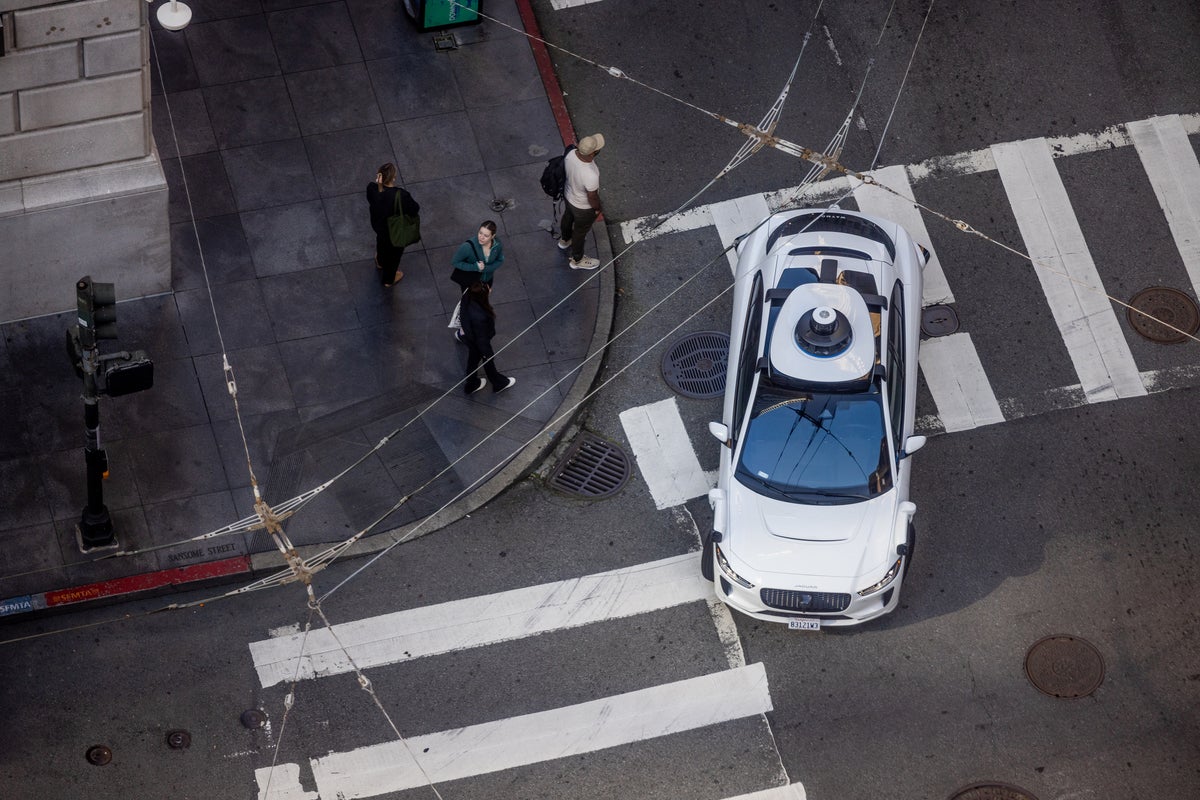
A driverless cabin isn't a safe space. It's a mobile surveillance box with wheels. When a Waymo robotaxi pulled over in San Francisco's Outer Richmond district because a remote human operator or vision-audio telemetry flagged an AR-styled ghost gun, the tech narrative shifted overnight.
Forget cute commercials of empty front seats driving past coffee shops. We are now dealing with automated patrol units that quietly lock down your commute, dial dispatch, and trap minors before dawn.
What Actually Happened on 40th Avenue
At roughly 4 a.m. on September 3, a Waymo vehicle pulled over on 40th Avenue. Inside sat two minors—one male, one female. San Francisco Police Department spokesperson Allison Maxie classified the resulting encounter as a high-risk vehicle stop. Officers recovered an AR-styled ghost gun, suspected marijuana, and mace.
The teens went to the Juvenile Justice Center. Waymo's telemetry and remote fleet monitoring did the rest.
Here is what journalists missed: How does an autonomous fleet flag an unregistered, polymer-heavy or hybrid ghost gun inside a dark cabin at 4 a.m.? Waymo hasn't published an AI gun-detection blueprint, and public relations teams aren't handing out specs on interior acoustic sensors, high-res optical object classification, or weight/silhouette heuristics. Yet the detection happened.
The Surveillance Reality Inside Driverless Taxis
You assume privacy in the back of a cab. You shouldn't.
Traditional human taxi drivers look in the rearview mirror and judge you. Waymo cabs use multi-camera rigs, internal passenger-facing or cabin-monitoring safety suites (designed to spot vomit, unattended items, or passenger distress), and direct cellular telemetry feeding back to operations centers.
When you book a ride under standard terms of service, you agree to automated monitoring.
- Internal optics and sensors: Track cabin clutter, safety belt compliance, and prohibited items.
- Remote human-in-the-loop: Ops centers review flagged anomalies within seconds.
- Discretionary override: The car stops where telemetry tells it to stop, doors remain electronically manageable or monitored, and local law enforcement gets a live GPS pin.
The Ghost Gun Blind Spot and Fleet Policy
Ghost guns lack serial numbers. They feature 3D-printed lower receivers, unserialized parts kits, or custom builds. Traditional metal detectors miss polymer-heavy configurations.
So how did Waymo's pipeline catch it?
Possibility one: visual profile match of an AR-platform silhouette against interior cabin cameras by a computer vision model trained on threat objects. Possibility two: live audio anomaly detection (racking a bolt, metallic clatter unique to carbines). Possibility three: direct rider behavioral indicators combined with secondary sensor cues.
Whatever the vector, autonomous fleets are evolving from passive transportation utilities into active law-enforcement adjuncts.
Compare this to the July San Mateo incident where teens drinking and shooting water beads got a fake "vehicle trouble" stall while police rolled up. Doors stayed unlocked, technically, leaving an illusion of egress. In a 4 a.m. high-risk stop with an AR-style carbine, extraction dynamics change. You aren't stepping out for fresh air; you're stepping into blue lights and tactical rifle barrels.
Why This Matters for Urban Transit Policy
Cities celebrating autonomous vehicle rollouts (San Diego, Denver, Tampa, and Phoenix) treat Waymo like public transit with better upholstery. Municipalities negotiate transit density, curb management, and ADA compliance.
Nobody legislated robo-cop dispatch protocols.
When a private corporation's software decides your car pulls over for a felony-level weapons flag, you live under algorithmic Terry stops managed by remote contractors.
- No Fourth Amendment barrier: Private companies collect cabin data under user agreements, bypassing warrant requirements until police take custody.
- Liability inversion: If a fleet misses a weapon and a shooting happens inside the car, litigation destroys the operator. If they pull over falsely, it's a customer service glitch. Bias tilts heavily toward aggressive intervention.
- The underage trap: Minors using stolen parental accounts or bypassing age gates find themselves locked into rolling interrogation rooms.
Practical Survival and Fleet Realities
If you ride in autonomous fleets—whether Waymo, Baidu's Apollo Go equivalents, or future Tesla Cybercab networks—adjust your mental model.
- Treat the cabin like public broadcast: Audio and video telemetry are active. Do not treat a robotaxi like a private living room.
- Know the exit mechanics: Understand manual door release overrides in every autonomous platform you enter. Panic locking features exist for safety; jammed electronics under police standoff conditions spell disaster.
- Expect zero negotiation: You cannot argue with a remote fleet supervisor who triggers a pullover sequence. Compliance is forced by physics and software lockouts.
- Corporate policy supersedes local carry laws: Even in open-carry jurisdictions or places with permissive concealed carry, private corporate fleets enforce zero-tolerance bans (Waymo Rider Rules explicitly forbid all weapons). Violation triggers algorithmic eviction or police interdiction.
The romantic era of driverless cars as neutral mechanical horses is over. They watch, they classify, they judge, and they pull over. Ride accordingly.