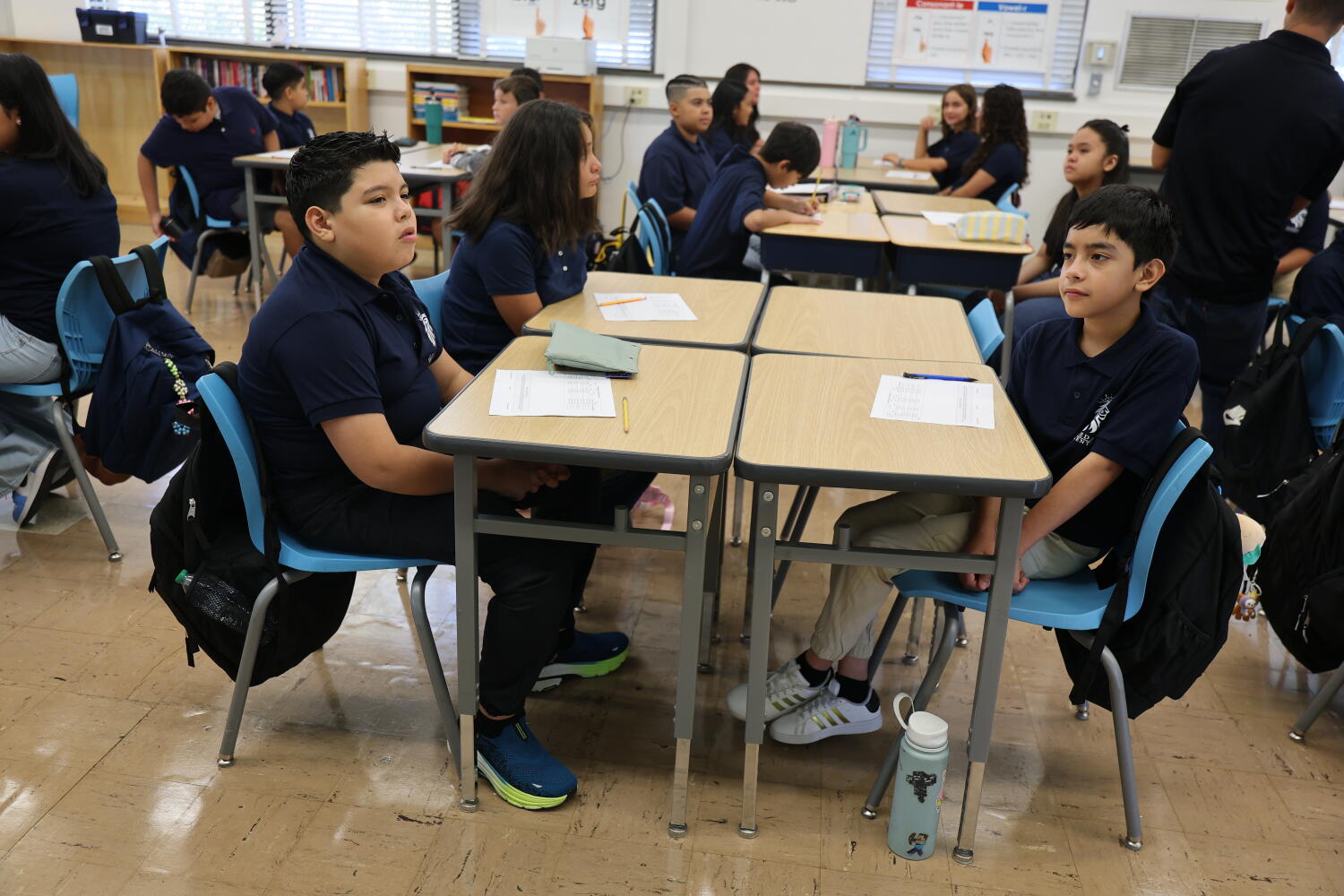
For decades, public schools across California locked nearly a million kids into a linguistic holding cell. They called it language support. But for countless students, it functioned as an academic cage.
You enter kindergarten speaking Spanish, Mandarin, or Tagalog at home. You learn English quickly. Yet, state bureaucracy refuses to let you go. You get hit with redundant exams, separate classes, and missed opportunities in core subjects like science and history. You aren't falling behind because you lack intelligence. You're falling behind because the system won't stop testing you long enough to teach you.
That broken cycle is shifting. State lawmakers passed Assembly Bill 2555 to overhaul a rigid reclassification framework that has held back English learners for generations. Let's look at what this means for classrooms, why the old setup failed, and what changes right now.
The Problem With the Old Reclassification Machine
Getting labeled an "English learner" is easy. Getting out of that category is notoriously difficult.
Under decades-old guidelines, school districts required students to jump through a ridiculous number of hoops to reclassify as fluent English proficient. Kids had to pass standardized language proficiency exams, hit arbitrary marks on state math and reading assessments, secure teacher recommendations, and clear parental consent hurdles.
If a student failed just one of those metrics—even if they spoke and wrote English perfectly—they stayed stuck in the English learner track.
This created a massive population of "Long-Term English Learners." These are kids born in the United States who spent years, sometimes all the way from elementary through high school, trapped in remedial language classes. They missed out on electives, advanced placement courses, and college prep tracks. They were over-tested, under-challenged, and completely exhausted by a system that treated language acquisition as a permanent pathology rather than a temporary skill.
What Assembly Bill 2555 Changes
Lawmakers recognized that the exit door was jammed. AB 2555 simplifies the reclassification requirements to clear out bureaucratic red tape.
To be clear, the bill doesn't lower the academic bar. Students still have to demonstrate actual proficiency on state assessments. What changes is the elimination of redundant, overlapping local hurdles that did nothing except slow kids down.
Instead of treating every district like a separate fiefdom with its own bizarre set of local entry and exit rules, the new law standardizes the process. It forces schools to look at the whole student rather than trapping them because of a single low score on a high-stakes standardized test.
When you remove extra testing burdens, schools can redirect time and funding toward actual instruction. Teachers don't need to spend half the semester prepping kids for re-tests that measure test-taking endurance rather than linguistic capability.
Why This Matters Beyond the Classroom
Education policy changes often sound like dry administrative updates. This one is different. Nearly a million children in California public schools are classified as English learners. That is roughly one out of every six students in the state.
When you trap that many kids in remedial loops, you damage the broader workforce and economy. Bilingualism is a massive economic asset in California's global marketplace. Treating native multilingualism as a defect to be corrected, rather than an advantage to be polished, makes no sense.
Schools that cling to old remediation models usually point to test scores as their shield. But study after study shows that keeping students out of grade-level content because of language quirks causes cumulative academic damage. A child stuck in remedial English at age twelve misses out on complex science concepts taught in mainstream classes. By high school, the achievement gap widens—not because the student isn't capable, but because the schedule locked them out.
What Parents and Teachers Should Do Next
If you're a parent of a student navigating language programs in California, you shouldn't wait for your school district to figure things out on its own. Bureaucracy moves slowly, even when the law changes overnight.
- Check your student's reclassification status: Ask your school administrator specifically what metrics they use for reclassification this school year under the updated state guidelines.
- Push for mainstream access: Ensure your child isn't being pulled out of core academic subjects like science or arts for extra language drills if they already communicate well in English.
- Demand transparency: Request clear timelines for when your child is scheduled to take proficiency re-evaluation tests.
The state finally acknowledged that the old rules were holding kids back. Now it's up to local districts to stop dragging their feet and let these students move forward.